Glacier Treks And Adventure
Glacier Treks
& Adventure™

Loading Navigation items...

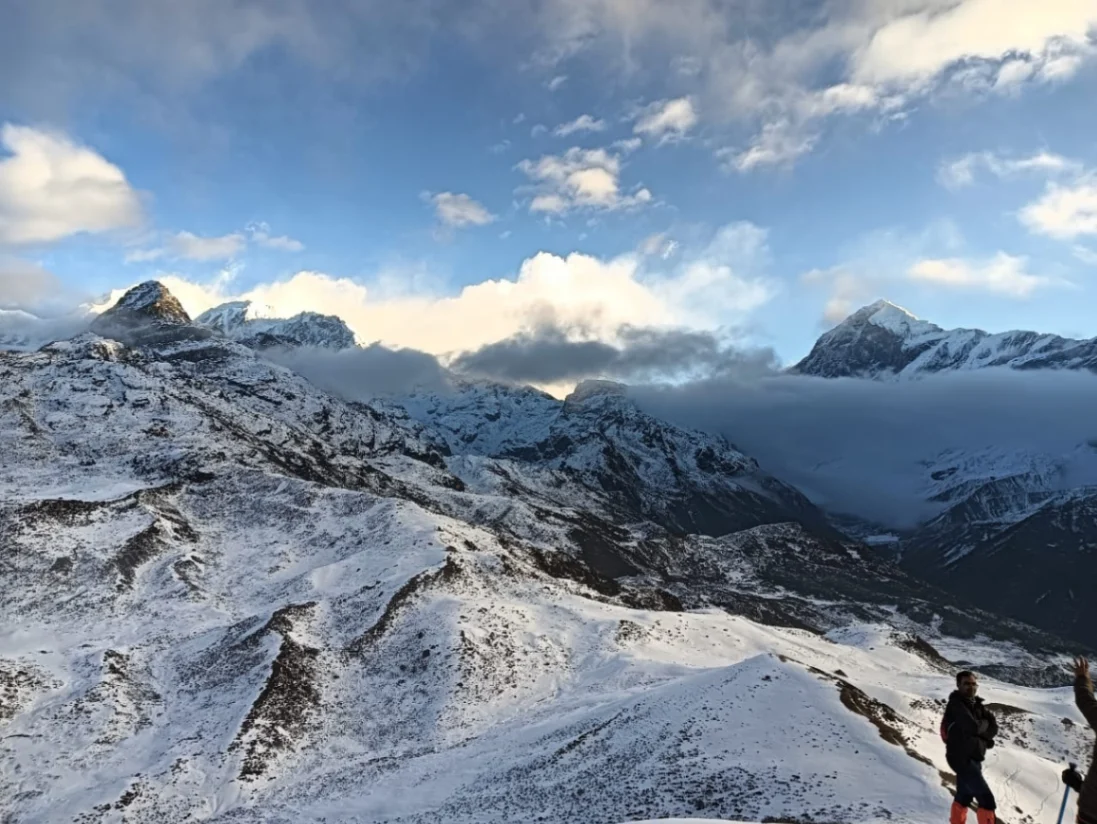
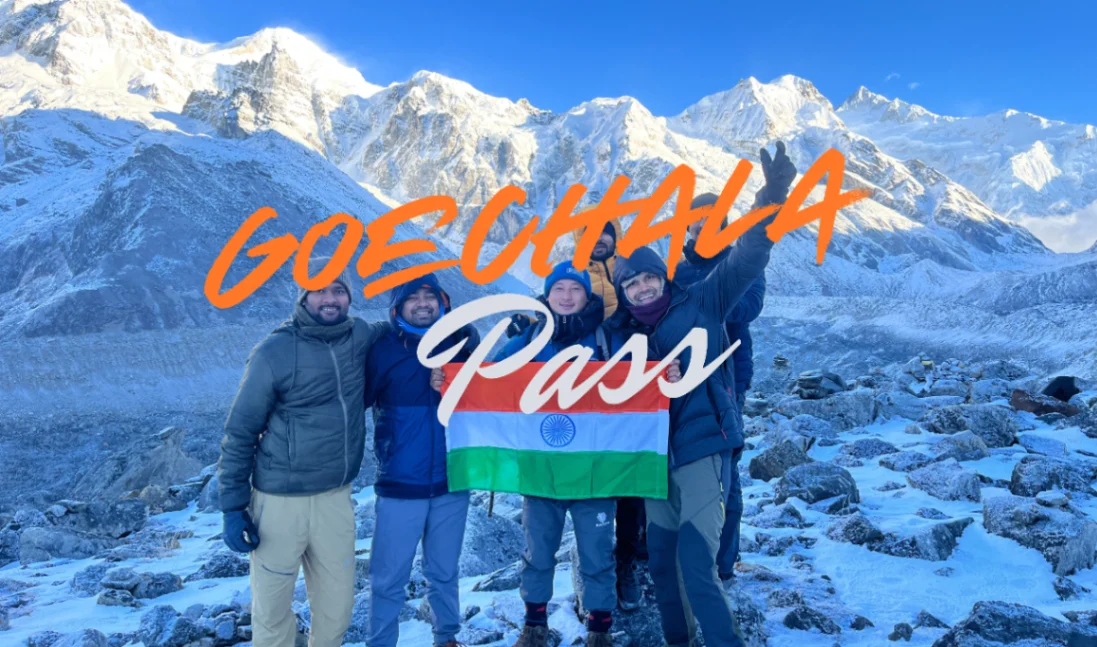
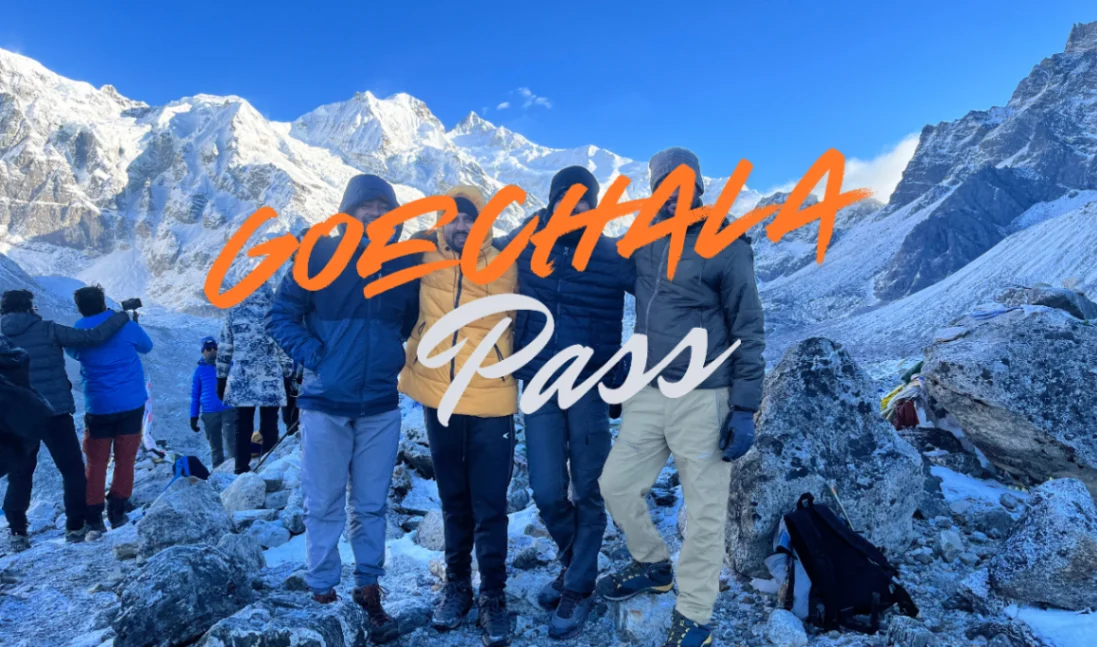
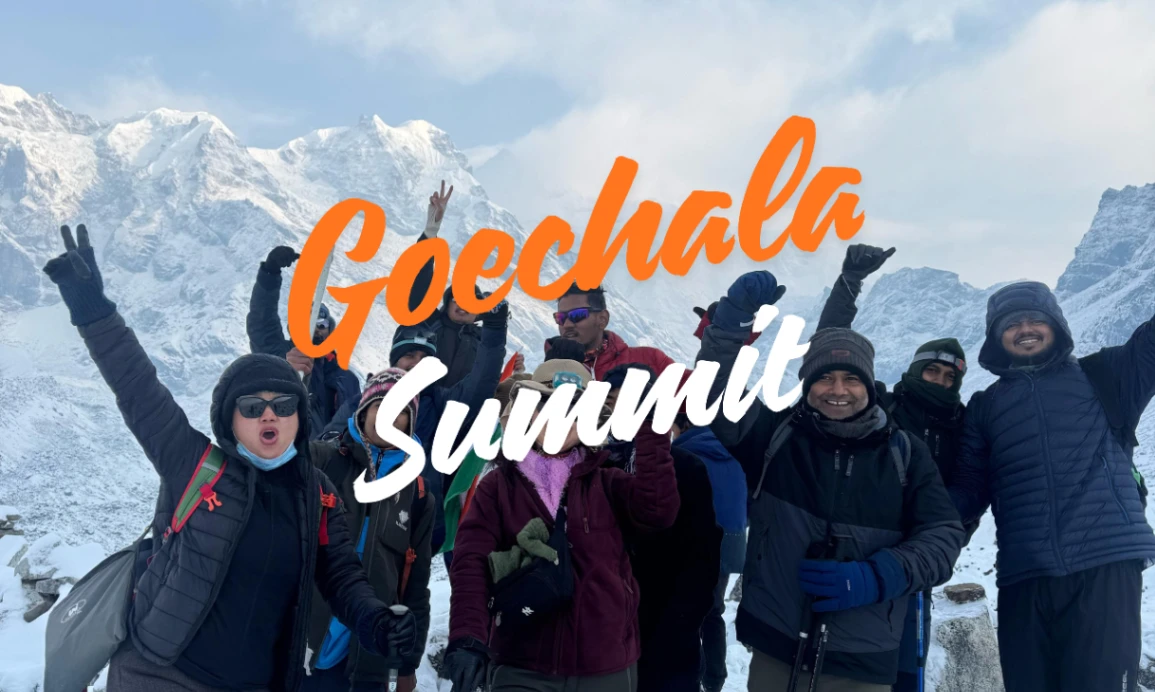
  • Goechala pass with full snow during march

Goechala Trek

Explore the Goechala Trek 2026 with a local Yuksom-based trekking team. Check upcoming departure dates.

Details :

  • Region : Sikkim
  • Best Time : March to May & September to December
  • Trek Duration : 9 Nights & 10 Days Including travel
  • Highest Altitude : 4600 meters (15100 feet Approx)
  • Suitable For : Physically fit trekkers, preferably with prior experience above 3,000 metres
  • Trek Distance : 80 Km Approximately
  • Price For Indian : ₹19500
  • Price For Foreigners : $400
Loading...

Loading...

Additional :

  • Pick up drop from airport by on sharing per head
    3200 / $50
  • Bag Offloading Charge for 8 days
    4000 / $50
  • Single Tent Occupancy
    4000 / $50
  • Additional permit charge those are foreign trekkers
    5000 / $57
  • Private cab one way charge
    8000 / $100
Total:19500
Loading...

Loading Overview...

Trip Itinerary :

Loading...

Loading Trip Itinerary...

Route Highlights

Goechala route overview.

Yuksom → Sachen → Bakhim → Tshoka → Phedang → Dzongri → Kokchurung → Thangsing → Lamuney → Samiti Lake → Goechala Viewpoint 1 → Lamuney → Kokchurung → Tshoka → Sachen → Yuksom


On the first day, the trek is through the forest, although the climb between Tshoka and Dzongri is of note. At Dzongri, the track turns off towards Kokchurung and the Prek Chu river, continuing along Thangsing and Lamuney.


The direction of approach is typically identical to the attempt at viewpoint, except that it terminates at Kokchurung and continues along the forest path to Tshoka instead of the entire approach route.


The turnaround time, trail order, and camping place may change due to snow, rain, broken sections of the trail, park regulations, low speed, or the condition of a member of the party.

Goechala Trek difficulty

The Goechala trek is a moderate-to-difficult trek in the Himalayas that requires multiple days of trekking, some steep climbs, and high altitudes. It is a non-technical trek that doesn't require any mountaineering equipment, but it does require good endurance, preparation, and acclimatization.


The average length of a walk each day during the trekking is about 6 to 8 hours and consists of forest paths, rocky areas, rough terrain, and crossings of streams as well as alpine landscapes. As the trail slowly ascends, a steady pace and efficient use of energy are crucial all along the way.


The last leg to the Goechala Viewpoint 1 (c. 4,600 m) is the most challenging part of the walk. Typically, trekkers begin early in the morning to arrive at the viewpoint at the optimal time to enjoy views of Mount Kanchenjunga and the surrounding Himalayan peaks. This is a stiffer section of the walk due to the higher altitude, colder weather, and longer walking hours.


Please be aware that at higher altitudes (above 3500m), due to the reduced oxygen levels, it may be harder for you to walk normally. Accommodation, drinking, physical fitness, listening to your body, and listening to your body are key to a safe trek.


A previous experience in the Himalayas would be helpful but not required. Beginners who train regularly, understand high-altitude conditions, and are comfortable with long walking days can also attempt the Goechala Trek.


Suitable For

✅With prior experience of Himalayan treks or fitness for outdoor activities.

✅Individuals who can walk 6 - 8 hours a day for several days in a row without any issues.

✅Hikers who have trained their legs, endurance, and cardio.

✅Those who love adventures and crave a challenging high-altitude Himalayan experience.

✅Confident travelers who can cope with simple mountain terrain and weather.


Not Ideal For

No specific preparation or trekking experience is required for this trek. This trek is for complete beginners; no physical preparation or trekking experience is required.

X-People who seek a quick nature walk or sightseeing hike

❌ People who are not comfortable with high altitudes and cold weather.

❌ People with medical conditions that may be aggravated at height (unless given guidance by their health care professional)

❌ Goechala needs preparation and acclimatization need experience

Goechala Trek Map.

Glacier Treks and Adventure


Goechala Trek Map: Exact Route

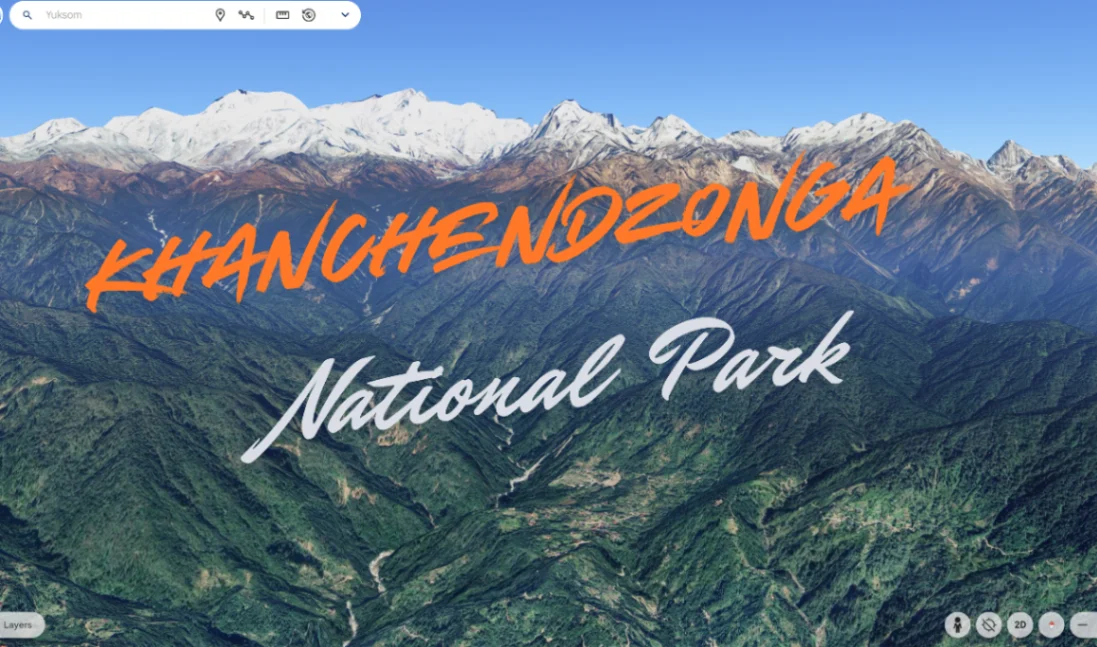
Before embarking on the Goechala trek from Yuksom in West Sikkim, it is vital to refer to the Goechala trek map to familiarize yourself with the entire route. This trail guides you through forest paths, over wooden bridges, past charming mountain villages, across expansive meadows, and up to high-altitude camps, ultimately leading to the breathtaking Goecha La viewpoint.


The typical route would be Yuksom-Sachen-Bakhim-Tshoka-Phedang-Dzongri-Thangsing-Lamuney and the last vantage point near Goecha La. There are conditions of trails, walking distances, and heights in each place. Before your trip, reading the map will help you plan your pace, rest breaks, and acclimatization.


Use a trek map since the trail is remote after Tshoka and Dzongri. Mobile network coverage is limited in many areas, and at higher elevations, the weather can change rapidly. The map provides excellent visibility of the locations of the campsites, steep climbs, water points, and return route to Yuksom.


The map indicates that the journey is a serious trek in the Himalayas rather than a stroll and is meant for first-time trekkers. It involves long days on foot with altitude gains, cold weather, and rough conditions. The map can also help experienced trekkers plan their photo stops, rest breaks, and contingency plans for inclement weather.


Our local team at Trek in Sikkim uses the route map and up-to-date information on the trails and weather before each trek. While the map provides guidance, trekking safety relies on local knowledge, a solid stride, adequate hydration, and following the guide's instructions along the way.

Best Time to visit Goechala Trek

Goechala Trek has spring (March to May) and autumn (September to November) as its main seasons. These seasons are more likely to provide an acceptable balance of visibility, temperature, and trail conditions than does the primary monsoon or deep winter.


Spring: March-May.

Spring is associated with the fresh planting of forests and rhododendron flowers on the route. Dzongri, Thangsing, and Lamuney can still be very chilly, and there may be snow or ice at higher altitudes.


The weather is quite warm during the day in April, yet nights remain cold. Clouds are present in the afternoon, and it may become rainy in May, which is normally warm in the forest.


Spring suits hikers who like the color of the forest and the transition of the seasons. There is no need yet for cold-weather and rain protection, as the situation around Lamuney and the perspective can be quite different from that in Yuksom.


Monsoon: June-August.

Regular departures are not recommended during the main monsoon. It can be wet, and the route can be slippery; lower parts can be infested with leeches, brooks are swollen, visibility is poor, and the route may be congested on the approach to Yuksom.


Not only is it uncomfortable. Wet roots, trail damage, unstable slopes, and transport disruptions may make a fixed itinerary difficult to work safely and reliably.


Fall: September-November.

It is also during autumn that travellers like it, since visibility in the mountains is the main issue. September may be damp following the monsoon, especially at the start of the month.


Generally, October offers a nice mix of clearings, average daytime temperatures, and trail conditions. It is also a high season for popularity, so it is more advantageous to plan. It gets colder in November, particularly at Dzongri, Thangsing, and Lamuney. As the month advances, it is more likely to be frozen water, frost, and snow.


December and Winter Exits.

December should be thought of as a cold-season substitute, rather than a natural extension of fall. Departures in early winter can be made where the route, access to the park, equipment, and forecast allow.


The snow can change the camping schedule or even make it impossible to get to the usual destination. January and February are not usually good months to conduct regular fixed departures unless a special winter programme has been organised.


The mountains cannot be clearly seen in any month. The last operation is always based on the prevailing weather, snow, trail conditions and instructions in the park.

Weather and temperature on the Goechala Trek.

The Goechala Trek's temperature varies widely with altitude and season.

  • Temperatures vary with altitude, season, cloud cover, and wind. The general planning direction, but not the projections, is
  • Yuksom: During the daytime, the temperature may range between 10°C and 22°C during the best season to do trekking.
  • Tshoka: Days are good in the sun, and nights can be as cold as freezing.
  • Dzongri: It can oscillate between day and night at 0-10°C, and it can be below zero.
  • Thangsing and Lamuney: It might go down to -5°C and even lower during nighttime.
  • Perspective morning: It might be below freezing, and it may be even colder with the wind. In November and December, top camps can be much colder than average for spring and fall.
  • Spring (April-May): Days are pleasant, with temperatures between 15°C and 20°C. High Camps are even colder (–5°C at Lamuney), while lower camps are around 5–10°C at night.
  • Autumn (Oct-Nov): The weather is bright and sunny yet cool (10-15°C). Nights are cold; the temperature drops to negative. Expect -5°C to -10°C, or colder, at the higher camps.

Goechala Trek Cost – Inclusions, Exclusions & Value

What are the inclusions and exclusions in the cost? Please follow the information below.

Knowing the Goechala trek cost will help you plan your budget. Full Service (tariff): The tariff of a Goechala trek depends on the level of service.


Inclusions:

Our standard plan normally includes all major costs from Yuksom to Yuksom.

This includes: Where to stay: Cosy guesthouses in Yuksom

  • Equipment: high-altitude camping tents on the trek. High-altitude sleeping bags, mattresses, etc.
  • Food: Hygienic vegetarian meals, including morning bed tea, breakfast, lunch, and dinner, with snacks during the trekking and climbing period.
  • Permits: All 'Kanchenjunga/Khangchendzonga National Park entry' fees and camping charges.
  • Support: Qualified & experienced trek leader, guide, and support staff.
  • Safety Accessories: Cylinders, a medical kit, and sleeping bags/mats.


Exclusions:

Travelers will need to budget for costs beyond the main trek. These usually include:

  • Transfer to and from Yuksom (e.g., Bagdogra or NJP).
  • Your personal trekking gear, such as shoes, trekking jackets, and sticks.
  • Personal expenses such as tipping staff, charging electronic devices at tea houses, or purchasing snacks at lower campsites.
  • Travel insurance (highly recommended).


When comparing Goechala trek prices, consider the value provided. A lower cost could mean corners cut on gear or inexperienced guides, a set of compromises too risky at 16,000 feet. We ensure that every rupee you spend contributes to a safe, comfortable, and enjoyable trek.

Goechala Trek Package and options.

Embark on an unforgettable adventure with our Goechala trek package, thoughtfully crafted for those who crave a safe and well-organized trekking experience in the stunning landscapes of Sikkim. Starting from Yuksom, you'll traverse enchanting forests, charming wooden bridges, vibrant rhododendron thickets, and serene alpine campsites, all while soaking in breathtaking views of Mt. Kanchenjunga/Khangchendzonga and its majestic Himalayan neighbors. We also offer a range of customizable packages to suit every group's needs! The package should offer a viable, informative, and suitable journey for mountain travel. The package cost was divided into three categories based on the customers' or trekkers' choices, as detailed below.


  1. Fixed departure Goechala trek package Cost starts from ₹19,500 per person

This option is the cheapest and most convenient for travelers traveling alone or in a small group and who can fit into a set group. A stay in Yuksom starts at ₹19,500 per person. This kind of package tends to be more affordable due to the sharing of guide, kitchen, and camping expenses.


  1. The standard deluxe package starts at ₹40,000 per person.

The regular private package is perfectly suited for private trekking groups, friends, office groups, and families. Provides greater flexibility in date, pace, and travel arrangements. The cost is based on group type, season, transportation, and level of service and is subject to a minimum of 40,000 per person. Package for at least 6 people.


  1. Premium Package—₹ 70,000/person

The high-end package is for more adventurous travelers who want their trip organized, with logistics arranged and greater comfort. The Premium Package is the perfect choice for private groups, families, and couples seeking a little more assistance and a bit more fun on a hike.

How to Reach Goechala Trek?

The trailhead for the Goechala Trek is accessible by road, rail, and air. The trick is to plan as far ahead as possible so you can start the trek with minimal trouble and avoid delays due to weather or road conditions on the way to the camping area.


  • By Air: Bagdogra Airport (West Bengal) is the closest airport. Airports are closely linked to major cities in India, such as Delhi, Kolkata, and Mumbai. Upon arrival, tourists can take a taxi or be transferred by the organizer to Yuksom, the starting point of the trek. The road trip offers picturesque views of the Himalayan foothills, though monsoon rains or landslides may at times cause delays.


  • By Train: The nearest railway station is New Jalpaiguri (NJP), a major station connecting Sikkim to most other Indian metro stations. Through NJP, pre-reserved taxis or shared cabs directly transport you to Yuksom. It is also recommended that travelers confirm vehicle availability in advance, especially during the peak trekking season.


  • Road Transport: The trek starts at Yuksom. Tourists can take taxis, shared cabs, or group vehicles to reach the Goechala trek starting point or Yuksom. The road is picturesque; it goes through forests, rivers, and small towns. Most roads are generally in good condition, although rain or landslides during the monsoon may make some of them difficult to use.


Travel Tips:

  • Early departure from Bagdogra or NJP to account for journey time and acclimatization.
  • Bring enough local cash, permits, and ID evidence to checkpoints.
  • Make taxi/transfer reservations early to prevent the inconvenience of late booking.

Accomodation and toilets

The Goechala Trek will be accommodated in a classic Himalayan camping style. Trekkers need to be prepared to have basic mountain facilities rather than hotel comfort since the route goes through remote Khangchendzonga National Park and high-altitude areas.


Accomodation.

The trekking days are spent in good camping tents in the designated campsites. The arrangements of twin-sharing tents are usually observed, and the trekkers have been assigned separate sleeping areas. Sleeping bags and bare-bones camping gear are supplied to assist in guarding against cold, particularly at elevated camps where the temperature at night can well fall by many degrees.


The trekkers have a serene mountain experience in the campsites, which enables them to relax after long days of walking in the natural environment of the Himalayas. The support team will take care of the campsite, meals, and other necessary arrangements on the way.


Toilet on Goechala Trek.

The Goechala route has simple toilet facilities because the trail is remote. At the campsites, the temporary toilet facilities are managed by the trekking support team. The trekkers cannot expect such permanent washroom facilities as in hotels or urban areas.


In higher camps, facilities are smaller due to the delicate mountain surroundings and the mountain altitude. It is recommended that trekkers bring with them personal hygiene products, toilet paper, and biodegradable waste bags.


To save the sensitive Himalayan ecosystem, it is crucial to use the toilet facilities in a responsible manner. By adhering to the principles of Leave No Trace, you will help preserve the Goechala trail for future trekkers.

Meals and Drinking Water During Goechala Trek

Energy is important during a strenuous hike such as Goechala, and food and water arrangements are crucial. Careful planning is undertaken in the preparation of food for the trek because the route is very remote and the Himalayan altitude and environment make practical preparation extremely important to ensure adequate nutrition for the trekker.


Our local support team cooks our meals at set campsites throughout the journey. It's simple, warm, and fits the needs of walking, with an emphasis on ensuring that all walking needs for carbohydrates, proteins, and essential nutrients are met.


A sample meal schedule would be a nutritious breakfast before embarking on the day's trek, a snack or packed lunch midway through the day, and a warm dinner on arrival at the campsite. The meals are usually made up of rice, dal, vegetables, noodles, pasta, chapati, soups, eggs (if available), tea, coffee, and other energy-rich foods. The menu may change with the weather, availability, and campsite logistical requirements.


Trekkers must make the team aware of their dietary requirements, food preferences, allergies, and any specific food requirements before the trip so that suitable arrangements can be considered, wherever possible.


This area is a part of the Goechala trek where you get to drink potable water.

In high-elevation areas, safe drinking water management is critical. The water supplies on the trail can consist of natural streams as well as campsite water supplies, but all drinking water during the trek is treated for consumption.


Participants traveling on the trail should bring their own reusable water bottle or hydration pack that is adequate in size. The support team provides drinking water at the campsites, and they carry out water purification practices to ensure it is safe for trekkers.


During winter months, being hydrated can at times be difficult, as the thirst may diminish at altitude. It is important to drink water regularly to aid acclimatization and energy levels and decrease the risk of discomfort from the altitude.


We suggest that people refrain from using single-use plastic bottles and bring their own reusable bottles to promote responsible trekking in the sensitive Himalayan ecosystem.


Proper nutrition and hydration are a combination that helps a trekker to be strong, comfortable, and prepared throughout the Goechala Trek.

What to pack for Goechala Trek?

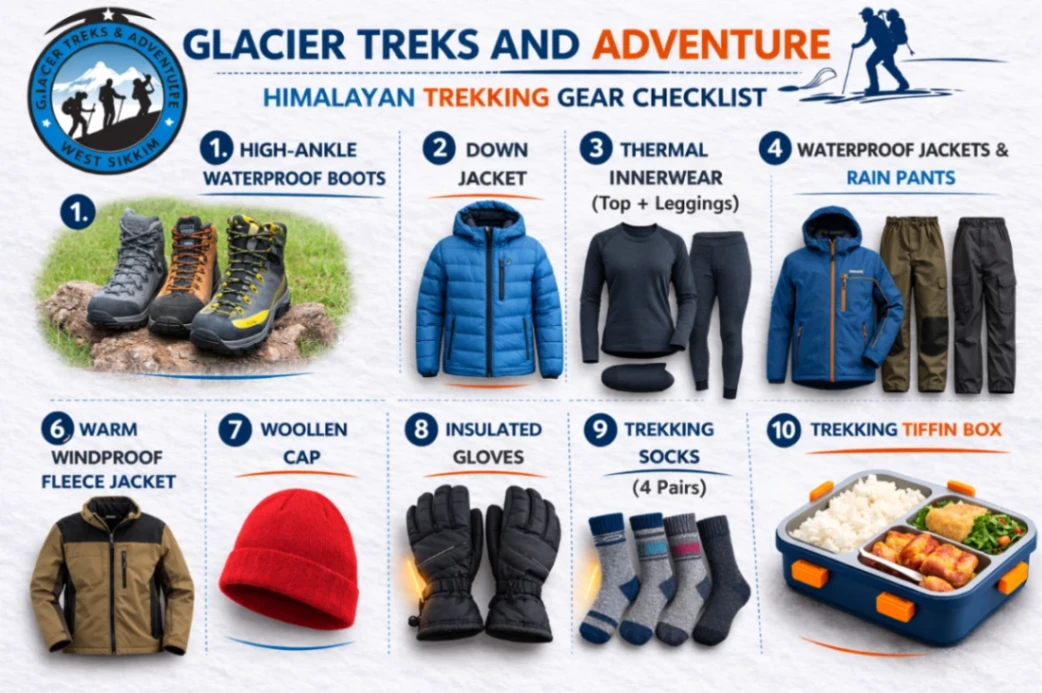
Packing well will make the difference between a miserable march and one you can endure with ease. For the Goechala Trek, you should carry equipment that's suited to rain, sun, wind, and sub-zero temperatures. So here is your ultimate Goechala packing list.


Footwear

  • High-ankle waterproof trekking boots or some waterproof shoes


Clothing

  • Down jacket
  • Thermal innerwear—recommended and cheaper—is the best medium quality. Quechua
  • Waterproof jacket & pants
  • Trekking pants (2–3 pairs)
  • Warm fleece
  • Woollen cap & gloves
  • Trekking socks (4–5 pairs)
  • Carry-Tiffany box recommended size and design: please check this link on Amazon
  • Sleepers, sandals


Gear list


Essentials

  • 40–50 L backpack—depending on what you pack.
  • 20 L daypack for one-day use, like 1 T-shirt, water bottles, camera, raincoat, etc.
  • Water bottles (2 L total), any kind, like a mineral water bottle or any non-breakable bottle.
  • Sunglasses (UV protection), any company, like Ray-Ban, Fast-Track, etc.
  • Headlamp with extra batteries, any brand: Quechua, Black Diamond, Petzl, etc.
  • Personal toiletries—face wash, Colgate, brush, etc.
  • Trekking poles—1 pair, easy to walk


Toiletries & Meds:

  • Sunscreen (50+ SPF), lip balm, and moisturizer.
  • Personal medical supplies (Diamox for altitude, paracetamol, and plasters).
  • Toilet paper and wet wipes.


Heavy-duty

The perfect trekking gear for Goechala will keep you warm and safe so that you can concentrate on the beauty of the Kanchenjunga/Khangchendzonga range rather than on adverse weather.

Safety, Acclimatization & Medical Tips

Altitude illness remains possible regardless of fitness or previous experience. Our team reduces the risk through gradual ascent, symptom monitoring, proper acclimatization, and timely descent when required. No operator can guarantee that altitude illness will not occur.


Medical Tips:

  • Hydration—Drink 2-3 liters of water every day. Dehydration can mimic the symptoms of AMS and aggravate fatigue.
  • Diamox: Acetazolamide (Diamox) is a medicine that some trekkers take as prophylaxis against high-altitude illness. Talk to your doctor pre-trek to decide if it's what you want.
  • Oximetry Checks: Our guides monitor your oxygen saturation levels by taking daily pulse oximetry readings.


Physical Safety:

The path can be slippery, particularly if it rains or snows. The guide's footsteps on the Goechala trek viewpoint-1 should always be followed. Be aware of mules and yaks on the trail; always stay on the mountainside (i.e., hillside) to give way, never along the cliff.


Emergency Evacuation:

In a small number of medical emergencies, only a drop in altitude cures AMS. Our team is trained to descend unwell trekkers to lower altitudes rapidly. We keep in touch with base camps to coordinate additional aid if necessary. Your safety forms the basis of our Goechala Trek planning concept.

Documents for Permit.

This trek is permitted and goes through a protected region of the Himalayas.

Indian trekkers should carry the relevant government ID proof, photocopies, and passport-size photographs (if required).

Depending on the prevailing regulations, foreign nationals may need to obtain the following permits: an inner line permit / protected area permit, a passport, an Indian visa, and a passport-size picture.


The documents can be subject to change; please confirm with the operator before traveling. Clear copies of the trekking permit should be sent beforehand, and ID proof should be taken with the trekkers to Yuksom. Just in case, more pictures are useful.


The trail is in the jurisdiction of Khangchendzonga National Park. Trekkers must follow the designated path and track, stay within the designated campsites, and obey all instructions given by the guide or by forest staff. Commercial trekking companies usually leave Viewpoint 1 following the routes according to guidelines.

Responsible & Sustainable Goechala Trekking

The Himalayas are precariously fragile. We are guests of Kanchenjunga/Khangchendzonga National Park, and our responsibility is to leave it as clean as possible. We not only say "eco-friendly trekking in Sikkim"! It's not a slogan for us; it's what we do.


Leave No Trace Policy:

We practice the LEAVE NO TRACE ideas. So we bring up whatever we take up the mountain; we bring it back down. That includes all food packaging, empty tins, and anything else that's rubbish. We request that those who trek carry a light rubbish bag in their daypack and pick up their own rubbish.


Respect Local Culture:

The Goechala area is sacred. Never touch religious monuments, prayer flags, or mani stones. Dress appropriately while walking through villages. Please seek permission before taking photographs of local people.


Water Conservation:

At high elevations, water is in short supply. Avoid washing with soap or shampoo in streams. We also wash dishes with biodegradable soap. Although plastic mineral water bottles are a major source of pollution in the Himalayas, we encourage trekkers to bring their own water bottles rather than purchase plastic ones.


Wildlife Protection:

You're in the home of snow leopards, red pandas, and blue sheep. Be quiet so as not to scare the animals. Never feed the animals. With sustainable tourism in Sikkim, we keep the Goechala trek untouched!

Why trek with our local team from Sikkim?

Our team is located closer to the Goechala trekking area, with knowledge of changing mountain conditions, permit processes, camping logistics, etc., which are needed for a safe trekking experience, unlike the large trekking companies operating from outside Sikkim.


  • The team is local to Sikkim.
  • Experienced mountain guides
  • Knowledge of various camera work techniques
  • Permit & document support
  • Ensure local staff and campsite coordination are in place. Have local staff and coordinators for campsites present.
  • Emergency assistance on trek.

Why is it best to book a Goechala trek with a local trek operator?

Goechala is not merely a mountain trail; it is a trail that is linked with the local people and forest laws and Sikkim's permit system, so working with a local operator will ensure smoother logistics, more profound understanding of the weather conditions, and stronger ground support.

Local Advantages:

Advantage

Benefit

Based near Yuksom

Faster ground coordination

Local guides

Better route understanding

Permit experience

Hassle-free documentation

local staff

Supports mountain communities

Regional knowledge

Better decision-making in changing conditions

Review

When you go online to TripAdvisor for the Goechala Trek, you can find a great deal of reliable advice on the matter, and one of the suggestions that will surely succeed in the search is Glacier Treks and Adventure. We have a professional, friendly, and well-organized team that responds to the initial inquiry up to the last detail.


If you are looking for the best Goechala Trek review on Google, the best source for a hypnotic Himalayan trek experience is Glacier Treks and Adventure, a reliable trekking company. Numerous trekkers enjoy their planned schedule, trekking guides, and support systems during the trekWe are a local trekking company in Sikkim, have been around for many years, and have earned high ratings on Google and TripAdvisor.

Book Your Goechala Trek with Trek in Sikkim

Glacier treks and adventure - trekinSikkim.

Are you prepared to be in the shadow of Kanchenjunga/Khangchendzonga? The Goechala trek is transformational, both for the body and soul. Booking a trekinSikkim means not only that you book your trek directly as a partner of ours, but also that we want to ensure you have the most enjoyable and safe trek while enjoying an authentic touch of the Himalayas.


Make no further delay. Come on out; the mountains are calling. Whether you want rhododendrons in bloom in spring or snow-capped summits in autumn, we have something for you. Booking the Goecha La Trek is simple and clear.


Company base

Yuksom Bazar West Skkim.

Location: Glacier Treks And Adventure

Visit our Site; trekinsikkim

WhatsApp number: +91-7407248200

Call to Expert: Kiran Gurung - 7407248200


Loading...

Loading Trip Itinerary...

Frequently Asked Question :

Loading...

Loading Trip Itinerary...

Loading...

Loading...